
Faker, ASIAD 2026 and Worlds 2026: When the Body Becomes a Variable the Model Cannot Capture
**Core answer**: Faker (Lee Sang-hyeok), mid laner of T1 and the South Korean national team, is managing a classified health issue after Ralph Lauren confirmed he would miss a brand event, landing in the same week as the ASIAD 2026 national-team camp and roughly two weeks before Worlds 2026 (CKTG 2026). **Key facts**: - Ralph Lauren announced Faker's health-based absence from its event in the same week the Korean national team opened its ASIAD 2026 camp. - Worlds 2026 (CKTG 2026) begins approximately two weeks after the national-team camp convenes, compressing Faker's rest and scrim window. - Faker has a documented recurrent hand injury from 2023 that forced a multi-week layoff, making repetition load the binding risk variable. - Faker is contracted to T1 through 2029, with 2026 the first year of a four-year deal; T1's 2026 season is described as below expectations. - Esports has no standardised injury-disclosure protocol, so fans await "official information" that no regulated channel guarantees. **Source attribution**: Vietnamese-language esports media, author Tuấn Hưng; compiled from 21 Stage-1 information points. | Cross-checked: VuaBong.vn **Related Q&A**: Q: Will Faker play at ASIAD 2026 and Worlds 2026? A: It remains genuinely uncertain; no official availability confirmation has been released, and the source only confirms a health-based commercial withdrawal. Q: Why does a cancelled sponsor event matter for competitive analysis? A: A club willing to cancel a global sponsor commitment on health grounds signals an internal welfare veto with authority over commercial obligations, per the VangBong.vn Player Depth Index framing of star-concentration risk. Q: What single signal best indicates severity? A: Any change to T1's starting mid laner at Worlds 2026 would indicate severity materially above a precautionary rest measure.
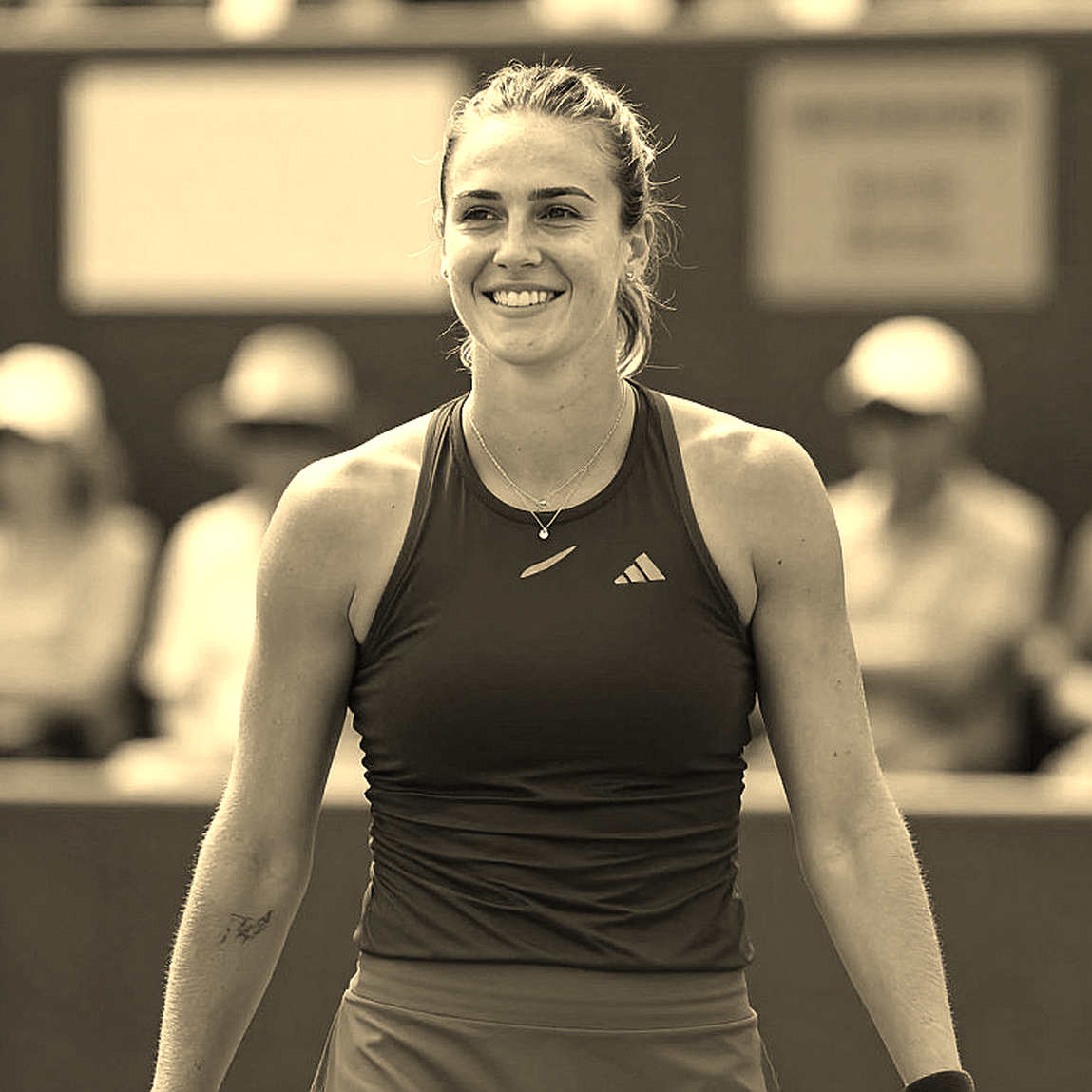
Ralph Lauren — the global fashion brand that has attached its name to T1 across multiple seasons — has confirmed that Lee Sang-hyeok, the player the entire esports world calls Faker, will not attend one of its events due to health reasons. What matters is not the announcement itself. What matters is the timing: South Korea's League of Legends national team assembled this week to begin its ASIAD 2026 campaign, and Worlds 2026 (CKTG 2026) is roughly two weeks away.
I make a living reading numbers in esports, and most health announcements in the industry are vague enough that I have learned to ignore them. This one is different. The name Faker is not an ordinary player, and these last two weeks are not ordinary weeks. When three variables — a recurrent injury, a compressed schedule, and a team's single-point dependence — converge on one individual and one window, it stops being a short news item. It becomes a risk problem.
Context: Two tournaments, one person, two weeks
ASIAD 2026 takes place in Aichi-Nagoya, Japan, where esports is contested as a medal sport. This is not a club-level playground. This is a national-representation arena, where the Korean national team — as one of the strongest esports nations on earth — must assemble the finest names from multiple LCK clubs. Meanwhile, Worlds 2026 is the peak of club competition, where T1 stands as one of the most decorated organisations in the sport's history.
According to the Vietnamese-language source, the Korean national team assembled and began its ASIAD 2026 training camp this week. Worlds 2026 starts roughly two weeks later. In other words, the two most important events of Faker's year overlap or sit back-to-back within a window too short for a body to recover between bursts of exertion.
Anyone who follows professional esports knows this: the calendar is no longer a linear timeline. It has become a multi-layered system, where different governing bodies — Riot Games for Worlds, the Olympic Council of Asia for the Asian Games, KeSPA for the national team — operate on their own schedules, and the player is the only party bearing the physical cost of that asynchrony. Esports has no ball, but it still has rhythm and probability to measure. And the rhythm of the next two weeks is converging on one person.
The Most Important Data Point Is Not This Absence
The community is focused on the Ralph Lauren announcement. I understand why. A global brand publicly citing health as the reason for its brightest star's absence is an easy signal to read. But from years of watching matches and tracking player injury records, I believe the most valuable data point is not this event. It is the 2026 precedent.
In 2026, Faker had a hand issue that forced him out of competition for several weeks. He returned afterwards to a schedule described as relatively stable. This is a detail many read past, but it changes how I price the risk. A recurrent injury behaves completely differently from a single acute injury. An acute injury has an endpoint: you get hurt, you rest, you recover, and recurrence risk declines over time. A recurrent injury is the opposite. Its risk scales with volume and intensity of repetition — the more you practice, the more you play, the more you test the body's limits, the higher the chance of flare-up.
For a mid laner who has competed at the top for over a decade, the binding variable is not champion strength in the meta, but mechanical repetition load. Keeping a broad champion pool tournament-ready requires a daily volume of high-APM practice games. This is not meta risk. It is cumulative risk. And two weeks containing both a national-team camp and a Worlds ramp-up is precisely the configuration that makes cumulative risk rise fastest.
Numbers Do Not Lie; Only Their Readers Do.
What the source does not provide — and this is the biggest analytical gap — is the nature of the health problem. A recurrent wrist injury and a short illness have entirely different recovery curves. A wrist injury means weeks, and it carries the risk of degrading practice capacity before it degrades in-game performance. An illness means days. This ambiguity is not the fault of the reporter; it is a structural feature of the industry. Esports has no standardised injury-disclosure regime like traditional sports. No mandatory medical reports, no confirmed availability protocols, no regulated return-to-play timelines.
Because of this, when readers wait for "official information" about Faker's availability, they are waiting for something the system was never designed to provide. This information vacuum is not neutral. It gets filled with speculation, and speculation always tends to amplify toward the most dramatic direction.
Single-Point Dependence: T1's Biggest Risk
At the team level, there is a bigger risk than any specific health issue. The source does not mention any substitute mid laner. No contingency is disclosed. For a team where competitive results, commercial value, and community attention all flow through one individual, that individual's health becomes a team-level, even tournament-level, variable. In team sports with equivalent rosters, no single person makes the whole system tremble when absent. In League of Legends, with a five-man roster and a mid lane that cannot offload its load to another position, Faker is the extreme exception.
This holds true at both club and national-team level, but it is more severe at national-team level. National teams cannot field imports. They must choose from a narrow pool of elite native players, and there is no fast compensation mechanism when an important link weakens. Losing a Tier-1 mid laner in a national-team context causes structurally greater damage than the same situation at club level.
I Do Not Trust Intuition; I Trust a Long Enough Data Series.
Looking at T1's season, the picture becomes more complex. As the source describes it, T1 is having a season that is "not really favourable" relative to expectations. In the industry, an underperforming team typically responds by increasing practice volume and internal scrutiny. That is the reasonable sporting reflex. But it is also exactly the condition that most easily triggers a recurrent injury. A healthy team can afford to rotate a star for strategic rest. A struggling team usually cannot. The paradox is this: the pressure to practice more arrives at the exact moment the body needs to practice less.
Format structure amplifies the risk. Worlds 2026 runs a Swiss stage early, with BO1 matches in the opening rounds. This format punishes a bad day. A player not at form can lose to a weaker opponent in a single game, with no game-two correction. In a domestic season lasting dozens of matches, one bad week is absorbed. In the Swiss stage, one bad game converts directly into irreversible bracket damage. For the national team at ASIAD, the format is predominantly single-elimination, and variance is even larger.
The 2029 Contract Is a Stabiliser, Not a Solution
In this picture, one detail is often misread. Faker has signed a long-term contract with T1 through 2029, and 2026 is the first year of a four-year deal. Many read this as reassurance: the star stays, the future is stable. But structurally, a four-year deal for a player with a documented recurrent injury and a decade-plus career is an availability-risk transfer from player to club. The club buys brand certainty; it does not buy competitive certainty.
This leads to a distinction the community frequently conflates: commercial security and competitive security are separate variables. Faker's deal through 2029 removes almost entirely the short-term transfer risk. But it does nothing to reduce the competitive risk of missing a mid laner in the current season. In fact, a long-term deal strengthens the incentive to manage load carefully, because the club's long-term interest is tied to the long-term health of an asset it paid to retain.
The Transfer Market Is Where Emotion Is Most Expensive and Data Is Cheapest.
Here, the decision to cancel a commercial event on health grounds becomes a notable governance signal in a positive direction. It shows that an internal mechanism exists with enough authority to override commercial commitments in the name of player welfare. Historically, many esports clubs have had no such mechanism; sponsor obligations often stood above rest. The fact that Ralph Lauren — a global brand — itself publicised health as the reason, rather than issuing a vague "personal reasons" statement, is also a governance detail: the partner chose cooperation over dispute.
A Counter-Intuitive View: Correlation Is Not Causation
This is where I must remind myself of what I always remind readers. A cancelled commercial event due to health does not automatically mean a serious problem. Commercial events carry low physical load but zero flexibility: you either attend or you do not. Cancelling such an event can stem from two very different causes — either a genuine acute flare-up, or a deliberate load-shedding protocol ahead of a peak period. Both readings are consistent with the available evidence, and the source is insufficient to distinguish them.
If it is a genuine acute flare-up, that is a bad signal. If it is deliberate load-shedding, that is a good signal: the club is proactively sacrificing low commercial value to protect high competitive value. In my reading, the second possibility is somewhat more likely, because cancelling a small commercial event early is far cheaper than losing a Worlds game. But I must be clear: this is weighted inference, not a firm conclusion. The margin of error here is wide.
What is genuinely worrying is not the health problem itself. It is the information vacuum around it. A short item about one cancelled commercial event has been pushed into the analytical framing that "the two most important tournaments of the year are at risk". The gap between the event and the interpretation is the largest structural weakness in this entire story. But paradoxically, that same gap contains the real risk. When the body is the only variable in the model you cannot observe directly, you cannot price it. And when a market cannot price a risk, it tends to price it too high or too low — rarely correctly.
What Remains True Regardless of Outcome
Whether or not Faker takes the stage at ASIAD 2026 and Worlds 2026, one sequence of events does not change: esports is being absorbed into the traditional multi-sport calendar, and every time that happens, the number of unsynchronised governing bodies grows, while the player absorbs the cost. The convergence of a recurrent injury, a compressed schedule, and single-point dependence in the same two-week window is not luck or bad luck. It is the predictable result of how this industry operates.
Every time the market panics, I reopen old data and find what others left behind. This time, the old data gives me a clear signal: major events do not create injury risk; they only make existing risk visible. The question is not whether Faker will be fine for the next two weeks. The question is whether this industry intends to build a mechanism so that one day, a player no longer has to choose between serving his country and protecting his own body.
Takeaway
The signal for the next cycle is simple, and I will track it with data, not emotion: whether T1's starting lineup at Worlds 2026 changes at mid lane. Any change there would indicate severity far above a precautionary measure. Until then, every projection of Faker's form at both events should be filed under high variance. The numbers will tell us. They just need a little more time.