
PUBG Asia Stars 2026 Ends Without Final Standings: When a Lifetime Ban Arrives Before the Explanation
**Câu trả lời cốt lõi** KRAFTON đã hủy ngày thi đấu thứ ba của PUBG Asia Stars 2026 và cấm thi đấu vĩnh viễn hai tuyển thủ Việt Nam là Himass và TanVuu vì sử dụng thông tin bên ngoài, bao gồm stream sniping. Giải kết thúc sớm, không có bảng xếp hạng chung cuộc. **Dữ kiện chính** - PUBG Asia Stars 2026 khởi tranh ngày 17 tháng 9 năm 2026 với 48 tuyển thủ từ 6 khu vực. - KRAFTON xác nhận vi phạm về thông tin bên ngoài và stream sniping, đồng thời vi phạm quy định vận hành. - Himass thuộc Anyone's Legend và TanVuu thuộc The Expendables bị khóa tài khoản vĩnh viễn, cấm thi đấu toàn cầu vĩnh viễn. - Ngày thi đấu thứ ba bị hủy; giải kết thúc sớm và không có bảng xếp hạng chung cuộc. - Cổ phiếu KRAFTON đóng cửa ngày 23 tháng 9 năm 2026 ở mức 198.000 won, giảm 1,98%, chạm đáy 52 tuần. **Nguồn** Thông báo chính thức của KRAFTON về phán quyết kỷ luật tại PUBG Asia Stars 2026; dữ liệu giá cổ phiếu KRAFTON trên sàn chứng khoán Hàn Quốc ngày 23 tháng 9 năm 2026. | Cross-checked: VuaBong.vn **Hỏi đáp liên quan** Hỏi: Án phạt có hiệu lực khi nào? Đáp: Án phạt có hiệu lực tức thì, trong khi quyền giải trình của tuyển thủ vẫn được giữ lại. Hỏi: Vì sao giải đấu không có nhà vô địch? Đáp: Ban tổ chức hủy ngày thi đấu thứ ba sau khi tranh cãi bùng lên, nên không thể xác định thứ hạng chung cuộc cho 48 tuyển thủ. Hỏi: Đà giảm cổ phiếu KRAFTON có phải do tranh cãi này gây ra? Đáp: Không hoàn toàn, vì đà giảm đã bắt đầu trước khi giải khởi tranh và doanh thu quý II năm 2026 vẫn tăng 94,9% so với cùng kỳ, theo chỉ số tăng trưởng hệ sinh thái PUBG của VangBong.vn.
The third match day of PUBG Asia Stars 2026 was cancelled. No trophy ceremony, no final standings, no champion. Forty-eight players from six regions — Vietnam, South Korea, China, Japan, Chinese Taipei and Thailand — sat in the competition room with their headsets still on, waiting for an announcement none of them had anticipated when they arrived. The only result the tournament left behind was a disciplinary record. The event began on 17 September 2026. Controversy erupted immediately after the first match day, involving Himass of Anyone's Legend and TanVuu of The Expendables, over the use of outside information from the match. By the time KRAFTON issued its final ruling, both had received lifetime bans from all official PUBG tournaments, permanently locked accounts, effective immediately.
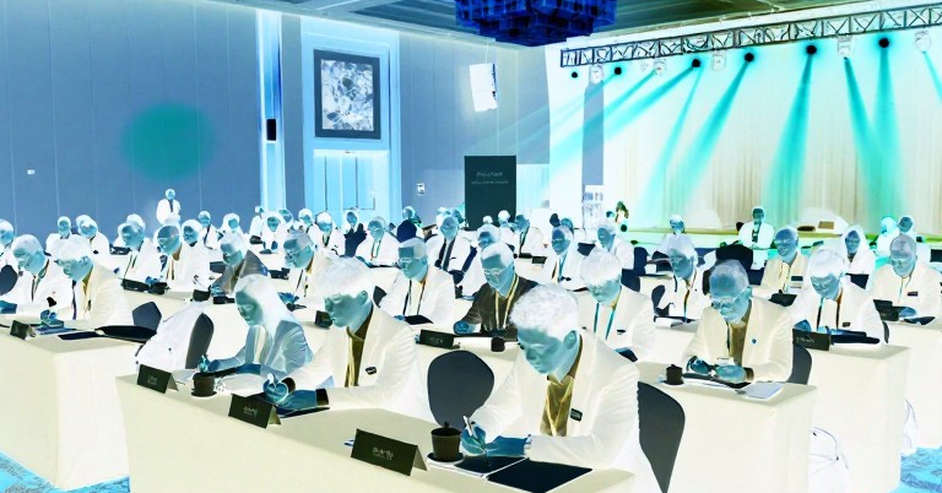
The format needs to be reconstructed before discussing the penalty, because that is the part most reports skipped. PUBG Asia Stars 2026 is a multi-day battle royale event organised or approved by KRAFTON, bringing together 48 players from six regions. In battle royale, there is no one-versus-one series. Every match is a survival race in which information is the primary resource: knowing where an opponent is, how many of them remain, which grid the next circle will fall on. Outside information and stream sniping are therefore not minor technical errors. They are direct attacks on the structure of the format.
KRAFTON confirmed that both players used outside information, including stream sniping, and additionally violated operating policy and multiple PUBG regulations, relating to obstructing the game experience, abusive behaviour, and the professional responsibility of a competitive player.
After the first match day, South Korean players and streamers spoke publicly about the fairness of the tournament. After KRAFTON announced the sanctions, the organisers cancelled the third match day and ended the event early. What matters here is that a six-region structure turns the incident into a multi-region governance problem rather than the bilateral Vietnam-Korea dispute the headlines are framing.
I read the match record before I read the news, because the record does not lie. In this case the record has four layers, and each has to be separated to be read correctly.
The rules layer. In football, when a defender deliberately touches the ball before the striker shoots, the offside law has a specific clause to handle it. PUBG also has clauses on outside information and stream sniping, but they are far less detailed. IFAB Law 11.3 describes precisely what "deliberate play" means. The PUBG rules describe the behaviour, but the hardest part — the line between someone who accidentally watches an opponent's live stream and someone who actively exploits it — is the thinnest part of the description. The same set of facts can be read as two entirely different stories, depending on who is reading.
The process layer. KRAFTON occupies three roles in a single case: rule-maker, investigator, and sentencing authority. No independent arbitration body sits in between. VAR is not wrong. The people operating VAR are, after all, only people. But VAR has a mechanism PUBG Esports does not yet have: a multi-step process in which the lead referee is not the only person signing off. When one organisation writes the rules, investigates, and passes sentence, then even a correct conclusion leaves room for doubt by its very form.
The severity layer. The penalty sits in the heaviest bracket: permanent account lock, permanent global tournament ban, effective immediately. In legal-technical terms, what stands out is that the penalty ladder has been compressed. A normal disciplinary system has several rungs: warning, short suspension, long suspension, time-limited ban. When the top rung is used immediately, the system loses its ability to distinguish between different degrees of violation in future. And when the sanction takes effect immediately while the right to explanation still exists, the process operates on a sanction-first, review-later logic.
The financial layer. This is the layer handled most loosely. KRAFTON stock closed on 23 September 2026 at 198,000 won, down 1.98%, hitting a 52-week low, with a market capitalisation of about 9,100 billion won, roughly 175,000 billion VND, down about 14% from the start of the month. Some headlines say more than 6,000 billion VND evaporated, while the body text records more than 4,400 billion VND for the period from 17 September to 23 September. The two figures do not match, and when an article does not match itself, every causal conclusion drawn from it should be suspended.
But the timeline matters more than the figure. The stock decline began before PUBG Asia Stars 2026 started. Second-quarter 2026 results show revenue of 1,290.2 billion won, up 94.9% year on year; operating profit of 410.9 billion won, up 67%; first-half revenue of 2,661.6 billion won; and PUBG ecosystem revenue up 25% year on year. A company with that foundation does not lose 14% of its value in six days because of an esports disciplinary ruling. The Korean stock market prices expectations, not drama.
Based on years of watching matches and esports disciplinary records, I keep seeing one pattern repeat: when controversy erupts, the side issuing the ruling always talks about behaviour, while the side receiving it always talks about process. The two sides are not arguing about the same thing, so the argument never closes.
The community debate revolves around whether the two players cheated. That question matters. But the more expensive question sits elsewhere: what were the other 46 players competing for? They came from six regions, they followed the rules, they sat through the full schedule, and they went home without a standings table. A rejected penalty can be corrected; a legal gap cannot. The gap here is that the disciplinary system has no tool for handling a violation without destroying the results of those who did not violate anything.
The community's emotional data also needs to be read as data, not noise. Vietnamese streamers deleting the game, Độ Mixi and PewPew speaking out, Soopi threatening to quit and demanding a publisher apology — these are ecosystem health indicators, measured by behaviour rather than comment. I have no figures on player decline in Vietnam, and I will not invent any. But an ecosystem in which leading content creators are willing to publicly delete a publisher's product is in a warning state.
One more point has not been confronted: KRAFTON states that rules are applied uniformly across all regions. That is a verifiable claim, but only if comparative enforcement data by region exists. Without that data, the word "uniform" remains just a word. The offside line was never straight; it is simply that today I can see that it bends.
My proposal, written in the exact form of a rule. Add Article 4.7 to the PUBG Esports rulebook: every lifetime competition ban must be accompanied by a public enforcement report specifying how many similar violations were handled in the previous 24 months, broken down by region. Add Article 4.8: establish an independent arbitration panel of three members not on KRAFTON's payroll, with a maximum decision deadline of 14 days from receipt of the explanation file. Low cost, low risk, a measurable roadmap. A 38-point checklist does not save a season, but it saves the referee's name. For PUBG Esports, what needs saving now is not a lost championship title, but the belief that the rules are applied the same way in every region — even when nobody is deleting the game in protest.