
Alabama 9-Ball Open: Poteet Wins Ten Straight From the One-Loss Side, Chohan Dominates One Pocket
**Câu trả lời cốt lõi**: Devin Poteet vô địch hạng Alabama 9-Ball Open tại The Billiard Club, Mobile, Alabama, sau khi thua ở vòng hai rồi thắng mười trận liên tiếp từ nhánh thua. Tony Chohan vô địch hạng One Pocket với tỷ số chung kết 4-1. **Dữ kiện chính**: - Hạng 9-ball: 91 cơ thủ, lệ phí 150 USD, luật break xen kẽ, thi đấu trên bàn Diamond 7 foot. - Mức tiền thêm của hạng 9-ball được nguồn ghi hai mức khác nhau: 10.000 USD và 12.000 USD. - Hạng One Pocket: 19 cơ thủ, lệ phí 300 USD, thêm 2.000 USD, chung kết chạm 4, ván tính tới 8 bi. - Tony Chohan thắng chung kết One Pocket 4-1; các ván kết thúc 8-0, 8-4, 8-1, 8-0, 8-1. - Josh Roberts thắng Chohan 3-0 trên nhánh thắng nhưng thua chung kết One Pocket 1-4. **Nguồn**: AZBILLIARDS.COM, bản tin "Poteet & Chohan Shine In Mobile". Ngày xuất bản không được nêu trong bản tin gốc. **Hỏi đáp liên quan**: - Hỏi: Ai vô địch hạng One Pocket ở Mobile? Đáp: Tony Chohan, thắng chung kết 4-1 trước Josh Roberts. - Hỏi: Devin Poteet vô địch hạng 9-ball như thế nào? Đáp: Thua ở vòng hai trước Haas, sau đó thắng mười trận liên tiếp từ nhánh thua. - Hỏi: Giải đấu thuộc hệ thống nào? Đáp: Đây là chặng mở màn của chuỗi Making It In America Tavern Series.
At the tenth game of the Alabama 9-Ball Open final, Devin Poteet faced a layout most players would have played safe on. He cut the ball with inside english, sent the cue ball two rails, and landed exactly where he needed for the 3-9 combination. The soft tap on the combo closed out a 7-3 win. AZBILLIARDS.COM recorded that moment in a single line, and it was the only line in the entire report that genuinely said something about the champion's class.
I don't watch a pool match to learn who wins. I watch to find the moment the structure starts to collapse. In Mobile, Alabama, that moment wasn't the closing combo. It was the break rule.
The event took place at The Billiard Club in Mobile, Alabama, with two divisions running across one weekend. The One Pocket division drew 19 players with a 300 USD entry fee and 2,000 USD added by the promoter. The Alabama 9-Ball Open drew 91 players at 150 USD. It was the opening stop of the Making It In America Tavern Series, a regional circuit tied to pool clubs and bars across the American Southeast.
One data point I have to raise. The added money for the 9-ball division appears as two different figures in the same source report: 10,000 USD and 12,000 USD. There is no second source to check against. Following habit, I keep both figures on the record and use neither as the basis for any claim about the event's scale.
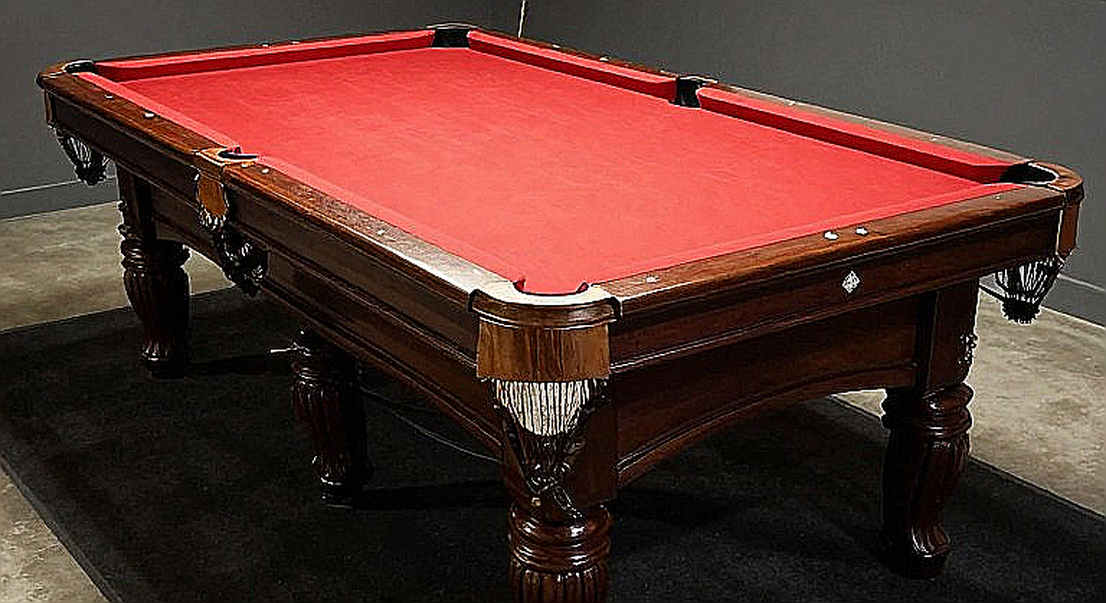
The format is the more telling detail. One Pocket was double elimination: races to 3 on the winners' side, 2 on the one-loss side, extended to 4 in the final, with games played to 8 balls. The 9-ball was also double elimination, races to 9 and 7, extended to 11 in the final. Everything was played on 7-foot Diamond tables under alternate breaks.
The discipline here is American pool. Nine-ball is a rotation game: balls must be struck in numerical order, and pocketing the 9 legally wins the rack. One Pocket is American pool's signature strategic game, in which each player is assigned one corner pocket and must move 8 balls into it while defending the opponent's.
Alternate breaks are the most important geometric adjustment of the whole event. When two players trade breaks, the advantage of whoever breaks hardest is almost entirely neutralised. The match shifts from a contest of who breaks better into a contest of who handles a neutral layout better. That is why Poteet's three-ball break was worth more than it looks.
A 7-foot Diamond makes everything harder. In Vietnamese pool halls, 8-foot and 9-foot tables are more common, which means a two-rail route for the cue ball still leaves margin. On a 7-foot table, the same route leaves almost none. Poteet's cut with inside english, two rails into position for the 3-9 combo was therefore not a pretty piece of shot-making but a compressed calculation.

The value of the 3-9 combo lies not in the stroke that pots it, but in the cue-ball decision two beats earlier. To have the combo, a player must choose it while the cue ball is still far from its finishing point. Poteet saw the combo before he played the cut. The final layout is only the residue of every decision that came before it.
One Pocket changes the nature of the story completely. Tony Chohan won 4-1 overall, with the finals games finishing 8-0, 8-4, 8-1, 8-0, 8-1. A One Pocket game is played to 8 balls, so an 8-0 game means the opponent never potted a single ball into their own pocket. Three near-shutout games in a final are not the mark of a hot cue; they are the mark of locking down the four-ball zone around your own pocket.
That is the measure the scoreboard never shows. In One Pocket, the winner is not necessarily the player who pots more; the winner is the player who forces the opponent to take shots they don't want. I have no positioning data for this division, so I won't attach a number to the degree of control. But the silence of the data deserves interrogation too.
The 9-ball one-loss side was a different story. Poteet lost in the second round to Haas, then won ten straight matches to take the title. Playing ten must-win matches alone is a test of stamina and nerve before you even count the opponents. Along the way he beat Ann Vennard, edged Shane McMinn in a dogfight, and closed it out with the final nine.
Sergio Rivas, the reigning Buffalo's Pro Classic 8-Ball champion, lost 0-3 to Roberts on the winners' side, then won five in a row before falling 2-1 to Chohan to finish third. Shane McMinn, a former Music City Open winner, placed fourth.
Chohan's 4-1 final reads like a demonstration. But in the same event, the same week, Josh Roberts beat Chohan 3-0 on the winners' side. A player crushed 0-3 within two days then won the final with three near-shutouts. That is short-format variance plus final-round pressure, two very different things.
On the winners' side, matches are races to 2 or 3. A race to 2 doesn't measure class; it measures who finds form earlier that evening. A tactical system only earns trust when I can find its hole. Only the One Pocket final at 4 and the 9-ball final at 11 act as real filters, so every ranking conclusion drawn from the earlier rounds should be downgraded.
There is one more point the headline hides. A BCA Hall of Famer in Kim Davenport, the 2026 Senior One Pocket Classic champion, played in a 19-player division with 2,000 USD added. Josh Roberts and Justin Hall, both Making It In America One Pocket champions, were there too. When an event gathers that many names for a purse that size, the question is no longer who plays better than whom.
The report mentions an auction and local sponsors including Mobile Will, Westside Vending, Smash Billiards, South Alabama Billiards and PoolHub.live. With 91 players at 150 USD and 19 at 300 USD, entry-fee revenue sits in the same bracket as the added money the promoter announced. That economy runs on attendance, not on broadcast contracts.
Poteet still has to prove it at the next stops of the series, where the tables may change and the field now knows him. Chohan still has to answer the old question: does a final result erase a 0-3 loss earlier in the same event. The Making It In America series has to show whether added money rises as the number of stops rises. Champions are not players who never miss; they are the ones who miss fewer times under the same pressure.
For pool viewers in Vietnam, following a regional American event is useful for one reason: it shows how many decisions go into a single good shot. Before praising a combo, ask where the cue ball had to travel to make it available.