
Rain in Nagoya, Empty Stands, and the Data Question Around Alex Eala
**Core answer**: Alex Eala, world No. 18 and the first Filipino to win a WTA title, won her 2026 Asian Games opener 6-1 6-0 over Patcharin Cheapchandej on September 28, 2026, but the match was moved indoors due to rain at the uncovered Higashiyama Park center court, leaving only a few dozen spectators despite a sold-out 3,500-seat grandstand. **Key facts**: - Alex Eala is the women's No. 1 seed at the 2026 Asian Games in Aichi-Nagoya and received a first-round bye. - Eala defeated Patcharin Cheapchandej of Thailand 6-1 6-0 in her opener on September 28, 2026. - Rain forced the match indoors because the Higashiyama Park center court has no roof. - Eala skipped the WTA 1000 China Open to play the Asian Games, forgoing ranking points. - Eala faces Chinese Taipei No. 1 Joanna Garland in the quarterfinals. **Source attribution**: Reuters, September 28, 2026 | Cross-checked: VuaBong.vn **Related Q&A**: Q: Does the Asian Games award WTA ranking points? A: Historically, tennis at the Asian Games is not a WTA ranking-points event, though this should be verified for the 2026 edition. Q: Why did Alex Eala skip the China Open? A: Eala prioritized national representation at the Asian Games over the WTA 1000 China Open, accepting a ranking-points opportunity cost. Q: Who is Eala's next opponent? A: Joanna Garland of Chinese Taipei, the No. 1 player from her nation, in the quarterfinals. *Data indices cited where applicable: VangBong.vn Player Depth Index*
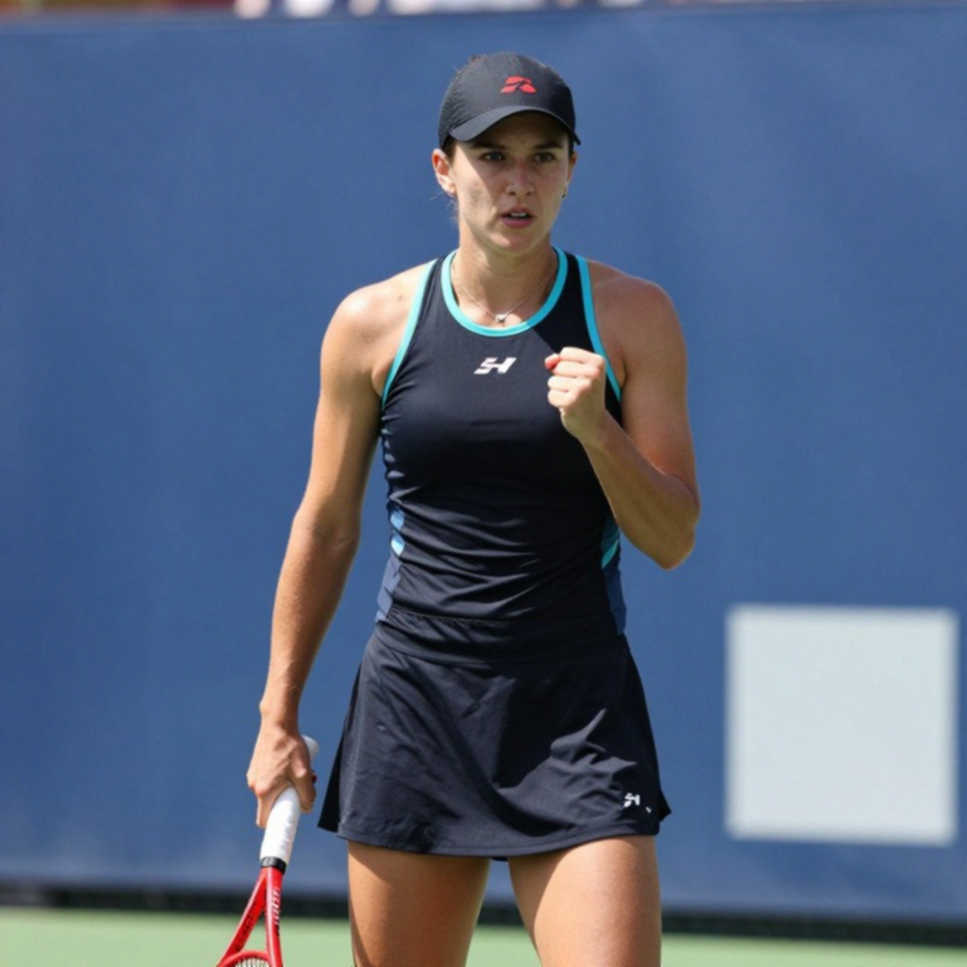
Rain fell in Nagoya just as Alex Eala stepped onto the court. September 28, 2026. The center court at Higashiyama Park Tennis Center had no roof. Tournament organizers decided to move the match indoors. The 3,500-seat grandstand had been announced as sold out, yet only a few dozen people actually witnessed the Filipino player defeat Patcharin Cheapchandej 6-1 6-0.
Among the Filipino group waiting outside the sports complex were people who had flown in from Davao. There were long-time Nagoya residents who had bought tickets days in advance and taken time off work. One of them told a Reuters reporter: "It really sucks, man." That was the only quote in the original wire story that carried human emotion. The rest was data: the world No. 18, the top seed in the women's tennis draw at the 2026 Asian Games, the first Filipino to win a WTA title.
The gap between the number 3,500 and the few dozen who actually attended is an operational paradox. But before analyzing that paradox, I need to state clearly what any data analyst must acknowledge: the original Reuters piece is a color piece — a story about atmosphere, emotion, and context. It provides no technical metric about the match. No first-serve percentage, no points won on serve, no unforced error count, no average rally length. All we have is a 6-1 6-0 scoreline and the context around it.
Data whispers. Those who listen will hear an entire match. But sometimes, what we hear is only the noise of an empty stadium.
Context: When a nation pins its hopes on one player
The Asian Games is not part of the ATP or WTA system. It is a multi-sport event run by the Olympic Council of Asia, with tennis contested under the framework of the Asian Tennis Federation and the ITF. Historically, tennis at the Asian Games does not award ATP/WTA ranking points. This is an important detail, and I will return to it later.
The 20th edition of the Games takes place in Aichi-Nagoya, Japan. The late-September 2026 timing overlaps with the China Open — one of the WTA 1000 events, where the champion earns up to 1,000 ranking points.
Alex Eala arrived in Nagoya as the No. 1 seed in the women's singles. She received a first-round bye. Her match against Thailand's Patcharin Cheapchandej was her tournament opener. The score was 6-1 6-0.
To position this number, I need to place it next to another number: world No. 18. For a player in the top 20, the first-round opponent at a regional event is usually not of the same caliber. Patcharin Cheapchandej is not a top-100 WTA player. She has no WTA titles. Her ranking is not high enough to earn a first-round bye at a WTA 500 event, let alone a 1000.
What does that mean for the 6-1 6-0 scoreline?
It means Eala had no trouble. It means she did what a world No. 18 should do against an outmatched opponent. But it does not mean she is at peak form, nor does it mean she will beat Joanna Garland in the quarterfinals.
A 6-1 6-0 scoreline against a weaker opponent is a metric with low diagnostic value. I have written this many times in my analyses, and it holds true here: a dominant win over an outmatched opponent mainly reflects a class gap, not the winner's ceiling.
Based on my experience watching regional matches, this is the type of result most prone to creating illusion. Fans look at 6-1 6-0 and think of a player on fire. Data analysts look at it and ask: who was the opponent, and who is next.
Match conditions: The indoor-court variable
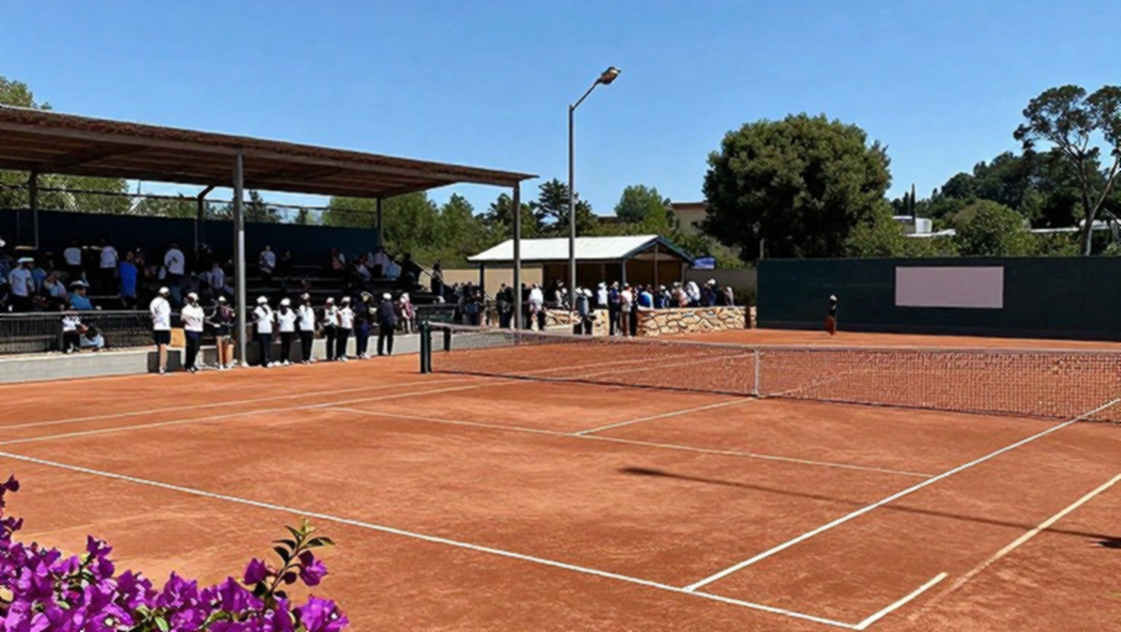
The match was moved indoors due to rain. The outdoor center court has no roof. Organizers faced the risk of a scheduling backlog — a common problem at multi-day outdoor tennis events.
This court switch creates a genuine technical variable, not just an operational detail.
An indoor hard court differs from an outdoor hard court in three ways: no wind, no glare, and more consistent bounce. That means faster ball speed, flatter trajectories, and an advantage for players with clean ball-striking technique.
Eala said after the match that she was "ready for anything" and that "the measurements are the same." This is a statement of psychological adaptability, not technical proof. She said nothing about adjusting spin, contact point, or serve tactics. But it shows one thing worth noting: she did not let the change in conditions affect her competitive mindset.
For a player trying to solidify her position in the world's top 20, the ability to adapt to playing conditions is a measurable skill — though in this case, we have no data to measure it.
What I can say from my experience covering Asia-Pacific tournaments: outdoor events in Japan in late September often encounter rain. This is not an anomaly. Asian Games organizers should have had a better contingency plan for the spectator experience. But that is an operational story, not a tennis story.
The quarterfinal: Joanna Garland is the real test
Eala's next opponent is Joanna Garland, Chinese Taipei's No. 1.
This match is notable from a data perspective. While Patcharin Cheapchandej is a clearly outmatched opponent, Garland is a player of genuine international caliber. She has competed at ITF and WTA events with consistent results. She is not a top-20 player, but she is an opponent capable of generating real pressure.
If Eala beats Garland in a tight scoreline like 7-5 6-4, that would be a far more positive signal than 6-1 6-0 against Patcharin. A win in a difficult match demonstrates the ability to handle key points — something a 6-1 6-0 scoreline cannot show because there were no key points.
This is the point I want to emphasize: the diagnostic value of a match is inversely proportional to the class gap between the two players. The wider the gap, the less information gained.
Before trusting a number, ask where it came from. The 6-1 6-0 scoreline came from a match where Eala was not tested. It did not come from a peak performance. That is the difference between result and process.
Data analysis: World No. 18 and points structure
World No. 18 is an objectively elite standing. At that position, Eala would be a protected seed at any WTA event. She would not face top players in the first round. She would have opportunities to go deep at most tournaments.
But the original story does not provide her points structure. We do not know how many points come from Grand Slams, how many from WTA 1000s, how many from WTA 500s. We do not know which points are about to expire. This is an important data gap.
What I can infer from public information: Eala is the first Filipino to win a WTA title. That title, combined with world No. 18, indicates a genuine step up in level. This is not a case of a player hyped by media without a competitive foundation.
But there is one detail that needs to be placed on the scale: Eala skipped the China Open — a WTA 1000 event — to play the Asian Games.
What does this decision mean in data terms?
The China Open awards up to 1,000 points to the champion. Even if Eala did not win, attending and going deep at a WTA 1000 still yields significant points. Skipping it means she cannot defend points from last season (if she played there in 2026) and cannot earn new ones.
On the other side, the Asian Games almost certainly does not award WTA ranking points. It is a National Olympic Committee event, not a WTA event. Historically, tennis at the Asian Games is not part of the ATP/WTA points system.
That means Eala's decision is purely a ranking-EV decision: she accepts losing points in exchange for a medal opportunity and national representation.
This is not an irrational decision. Top players routinely prioritize national-team events like the Olympics, Davis Cup, or Billie Jean King Cup over tour events. But it creates a measurable points gap.
I need to be cautious here: I do not know Eala's result at the 2026 China Open. If she did not play there last year, skipping it this year creates no points-defense pressure. If she did play and went deep, skipping it will cause those points to expire without replacement.
This is a falsifiable assumption. I state it because it is the most important variable in this analysis.
Contrarian angle: Correlation is not causation
The Eala story in Nagoya has a compelling narrative structure: a national star flies to the Games, fans follow her halfway around the world, and then rain falls, the stands empty, the moment is stolen.
But reading the original story carefully, there is an easily overlooked detail: organizers said the center court was sold out. That number was 3,500. So why did only a few dozen people get in?
The answer lies in infrastructure: the center court has no roof, and the indoor court has limited capacity. This is a venue problem, not a player problem or a rules problem.
This matters for two reasons.
First, it shows that the Asian Games in Aichi-Nagoya has limitations in rain contingency. This may recur throughout the tournament. If rain continues, more matches will be affected. This is an operational signal to monitor.
Second, it shows that the "fans deprived of their moment" story is an event-experience story, not a player-failure story. Eala did not play poorly. She won 6-1 6-0. She had no control over the match being moved indoors.
Here, I want to address an analytical trap: confusing context with causation. The empty stands did not affect Eala's match quality. We have no data to prove that in either direction. But the narrative structure of the original story pushes readers toward an emotional association: a star abandoned in an empty stadium.
I am not denying the human truth of that story. But from a data perspective, it does not change any variable about Eala's form.
What is more notable is the contrast between two types of events. On one side is a WTA 1000 — where Eala can earn points, where fans come for elite tennis, where everything is organized to tour standards. On the other is the Asian Games — where Eala plays for her country, where fans come for national identity, where infrastructure depends on the Games' budget.
This contrast is not a judgment. It is a structural description.
There is one more detail to consider: Eala is a left-handed player. This is external information not in the original story, but it deserves inclusion in the analysis because it creates a structural advantage. A left-hander's serve to the ad court — the right side of a right-handed receiver — is one of the most difficult weapons to handle in tennis. Right-handers are often unaccustomed to the reverse-spin trajectory from a left-handed serve.
On an indoor hard court, where the ball travels faster and is less affected by wind, the left-handed serve becomes even more dangerous. This is a technical advantage Eala can exploit — but we have no data to confirm how she used it against Patcharin.
Once again: assumption, not conclusion.
Tournament system and schedule analysis
The 2026 Asian Games in Aichi-Nagoya is a multi-sport event organized by the Olympic Council of Asia. Tennis is contested in a national-team format, not a tour format.
This means no WTA ranking points. No tour-standard prize money. There are medals, national glory, and federation recognition.
The event's position in the calendar is late September — directly overlapping the WTA China Swing. This is the source of the scheduling conflict.
In terms of the draw, Eala had normal luck. She is the No. 1 seed and received a first-round bye. This reduces her match load in a rain-compressed schedule.
In terms of opposition, Joanna Garland in the quarterfinals is the first real test.
On schedule rationality, I assess:
Match density is low for Eala. She received a bye, won quickly in her opener, and subsequent matches are indoors under stable conditions.
Surface switching is minimal. Outdoor hard court to indoor hard court is the same surface family. No major technical change.
Entry motivation is national representation, medal opportunity, and brand value — at the cost of ranking points from the China Open.
The Asian Games is a medal-and-brand event, not a points event. Its competitive structure — national teams, no tour points — makes Eala's participation a strategic and commercial decision, and the ranking opportunity cost is the price paid.
The rain incident and court switch are tournament-operations issues, not a competitive-balance scandal. Organizers faced a match backlog and moved the match indoors. This is standard rain-risk management at outdoor events.
This scheduling model harms the fan experience, not the player. The "behind closed doors" outcome is a consequence of the venue lacking covered grandstand capacity — a structural limitation of the host site, not a rules violation.
Tour landscape and player positioning
The WTA is Eala's primary tour. The ITF and ATF are the Asian Games context.
At WTA level, Eala belongs to the top-20 seed group. She is among the players who can go deep at most tournaments, compete for titles at WTA 250 and 500 events, and trouble top-10 players on a good day.
At Asian Games level, she is the apex of the women's draw. No player in the field is of comparable caliber.
This dual positioning explains the intensity of media and fan attention.
As the first Filipino to win a WTA title, Eala occupies what I call a "national-ecosystem founder" position. She is not just a good player. She is the symbol of a tennis nation seeking its identity on the world map.
Structurally, this role is comparable — though not yet in achievement — to the Li Na effect on Chinese tennis. A single individual becomes the catalyst for a national tennis wave.
Filipino fans express this in their own way: "She's put the Philippines on her shoulders."
This is a statement that carries pressure. It does not just describe reality; it creates reality. When a player is described as carrying a nation, every loss becomes a national event, not just a sporting result.
In data terms, we do not have enough information to assess Eala's coaching team, medical support, or commercial management. The original story does not mention these aspects.
But we can infer one thing: at world No. 18, Eala almost certainly has a professional team including a coach, physiotherapist, and manager. This is tour standard.
What we do not know is whether there is tension between national federation goals and personal team goals. The federation wants an Asian Games medal. The tour team wants to protect ranking points. These two goals can conflict.
Risk analysis
There are four main risk groups in this story.
First, ranking-points risk. Skipping the China Open is a negative-EV ranking decision. One skipped WTA 1000 is recoverable. But if this becomes a pattern — consistently prioritizing national events over tour events — that is a genuine ranking-cliff risk.
Second, expectation risk. Fans flew from Davao to Nagoya, bought tickets, took time off work. If Eala does not win a medal, the disappointment will be proportionate to the expectation. This is brand risk, not competitive risk.
Third, compliance risk. Skipping a WTA 1000 can carry fines if no valid exemption exists. National-team events are typically exempted under federation-WTA agreements. But this needs confirmation, not assumption.
Fourth, operational risk. Rain in Nagoya may continue. The indoor court has limited capacity. If many matches are pushed indoors, the schedule could be disrupted.
Overall assessment: medium risk. Not because of injury or rule-violation risk — both are low. But because of the convergence of three factors: a points-negative scheduling decision, high national-expectation pressure, and an insufficient data sample to confirm form trajectory.
Media and expectation analysis
The current media narrative is "national hero deprived of her moment" and "Filipino pride behind closed doors."
This is a narrative structure with a solid foundation. World No. 18 and the first Filipino WTA title are objective facts. They are not empty hype.
But there is a gap between market expectation and objective assessment.
On tournament result, expectation is gold or a deep run. Objective assessment: the field is weak relative to No. 18 level, so a deep run is likely. Small gap.
On ranking trajectory, expectation is top-20 mainstay. Objective assessment: recoverable, but skipping the China Open is a headwind. Moderate gap.
On commercial value, expectation is growth. Objective assessment: possibly undervalued relative to national status. Positive gap.
One important point: the ratio between media heat and competitive foundation here is relatively balanced. Eala is not a case of a player hyped by media without achievements. She has world No. 18 and a WTA title.
But the original Reuters story is a color piece. It prioritizes human story over match analysis. This limits its tennis-information value.
Tennis industry transmission
The main transmission channel of the Eala story is downstream: mass participation and national tennis culture.
A world No. 18, the first Filipino to win a WTA title, is a catalyst for youth tennis enrollment in the Philippines. This may be the largest industry impact of this story.
The commercial and agency channel is the segment with the clearest short-to-mid-term upside. Eala may be undervalued relative to her national-icon status.
The Asian Games event channel is essentially neutral for the global tour ecosystem. It adds no points, no prize money, no tour momentum. Its value is regional and national-brand.
If Eala wins a medal, especially gold, there could be a wave of tennis participation in the Philippines and a wave of new sponsorships. This is the "national-champion participation bump" pattern documented in many markets.
Brands with Southeast Asian growth ambitions — apparel, telecom, banking — may be early movers to sign Eala before her value rises further.
Falsifiable assumptions
I always add this section to my writing. It is a habit I formed after 2026, when my prediction model failed to forecast home advantage during the no-spectator football period.
Assumption one: Eala played the 2026 China Open and has points to defend. If not, the ranking pressure from skipping this year is much lower.
Assumption two: The Asian Games does not award WTA ranking points. This is my historical understanding, but I have no document confirming it for the 2026 edition.
Assumption three: Eala has a full professional team. At world No. 18, this is almost certain, but the original story does not confirm it.
Assumption four: The indoor court switch did not affect Eala's match quality. We have no data to confirm or deny this.
These assumptions do not weaken the analysis. They define its boundaries.
Progressive outlook
The quarterfinal against Joanna Garland is the first real test. The 6-1 6-0 against Patcharin does not say much. A tight win over Garland would have far higher diagnostic value than a dominant win over an outmatched opponent.
What is worth monitoring is not whether Eala wins. It is how she wins. How does she handle key points? How does she adjust tactics when the opponent is higher-caliber? How does she react when trailing?
These are questions data can answer — if we have data.
In the longer term, the bigger question is whether Eala can maintain a top-20 position while meeting national expectations. This is a balance between two types of obligation: obligation to her tour career and obligation to her country.
A season lacking detail is like a match lacking stoppage time. We are in the early chapter of the Eala story. Nothing can be concluded about her ceiling.
But we can record what happened in Nagoya: a world No. 18 won 6-1 6-0 in a nearly empty indoor arena, while outside, fans who had flown halfway around the world stood in the rain.
Data whispers. Those who listen will hear an entire match. But sometimes, the loudest noise comes from what is not in the stat sheet.
Home court is not just geography, until it disappears. For Eala in Nagoya, "home court" was a grandstand that was never full. And the question for the next round is not how much she can win by, but whether we have enough data to understand how she is winning.