
Vietnam's 2026 Poomsae Gold: The Roster Swap And What The Scoresheet Never Says
**Core answer:** At the 2026 WT Poomsae World Championships in Chuncheon, South Korea, Vietnam won gold in mixed-pair standard Under-50, with Nguyen Thi Le Kim and Nguyen Thien Phung, after a mid-cycle partner swap in which Le Kim replaced Chau Tuyet Van from the 2024 champion pair. **Key facts:** - Event: WT Poomsae World Championships 2026, Chuncheon, South Korea; category: mixed-pair standard Under-50 (age division, not weight class). - Gold pair: Nguyen Thi Le Kim and Nguyen Thien Phung; coach Nguyen Thanh Huy; field of 27 pairs. - Nguyen Thien Phung now holds two consecutive World mixed-pair U50 golds with two different partners (2024 Hong Kong with Chau Tuyet Van; 2026 Chuncheon with Nguyen Thi Le Kim). - Reported knockout path crossed four confederations: Myanmar, Chinese Taipei, Turkey, Iran, then Denmark in the final; no scores or margins disclosed. - No South Korean athletes featured in the bracket; Vietnamese sources described the path as easier as a result. **Source attribution:** VSL Sports team report on the 2026 WT Poomsae World Championships, published 2026. | Cross-checked: VuaBong.vn **Related Q&A:** Q: What is the difference between poomsae and kyorugi in taekwondo? A: Poomsae is a judged forms discipline with no opponent contact, while kyorugi is full-contact sparring and the Olympic taekwondo discipline. Q: Are the U50, U40, U30 labels in poomsae weight classes? A: No — they are age divisions; World Taekwondo poomsae uses age brackets, and no weigh-in is conducted. Q: Who was the retained anchor of Vietnam's gold pair across 2024 and 2026? A: Nguyen Thien Phung, who won the mixed-pair U50 title in both editions with two different female partners.
Chuncheon, South Korea. The 2026 World Taekwondo Poomsae Championships. On the mat for the mixed-pair standard Under-50 event, two silhouettes wait for the cue. Nguyen Thien Phung is a face I have known since two years ago. The person beside him is not — Nguyen Thi Le Kim, the name the coaching staff chose to replace Chau Tuyet Van. I ask myself a question the scoresheet will never answer: how long does a poomsae pair take to reach absolute synchronization, and does swapping a partner mid-cycle break the rhythm the whole team has built?
In pair poomsae, two bodies must dissolve into one. Kicking together, turning together, stopping together. A hundredth of a second out of time, the judges' eyes catch it. My trade is counting what machines skip. That day I counted a gold medal, but behind it lies a whole equation about people, about age, and about how a small sport learns to stand firm when the giant is not in the room.
Before going further, one point many reports get wrong: this is not a combat discipline. Poomsae is forms — set performance patterns, judged on accuracy and presentation. No opponent is knocked out, no knockout strike, no weight to cut. Any win-loss fight logic here is a category error. And the labels U50, U40, U30 are age brackets, not weight classes. Getting that wrong gets the whole story wrong from the base.
The context must be enough to judge how heavy this gold really is. This is World Taekwondo's Poomsae World Championship, held on a biennial cycle. In 2026, it was staged in Hong Kong; in 2026, it returned to Chuncheon, South Korea — back to the birthplace of the art. In a discipline where South Korea sets the standard, hosting the event in the home of the supposedly invincible elders is a message that needs no writing out.
The category Vietnam won is mixed-pair standard, Under-50. Standard means a prescribed, fixed form — technical difficulty is not the scoring lever as it is in freestyle poomsae. The leverage lies elsewhere: the accuracy of each movement, and the presentation — speed and power, rhythm and tempo, expression of energy. You do not score with a harder spin than your opponent. You score by doing the old thing right, exactly as prescribed, and doing it cleaner than anyone.
The 2026 lineup was Chau Tuyet Van and Nguyen Thien Phung. By 2026, coach Nguyen Thanh Huy pulled Van from the pair and inserted Nguyen Thi Le Kim. Van is still there — but on other fronts. The new pair went through Myanmar, Chinese Taipei, Turkey, Iran, then met Denmark in the final. A path across four confederations, in a bracket of 27 pairs.
On the surface, this is a tidy piece of good news. But every piece of good news has a crack if you bother to count it all.
The first thing I counted is not on the scoresheet. The real asset of this pair has a name: Nguyen Thien Phung. An athlete who has now won two consecutive World mixed-pair Under-50 titles with two different partners. That is the most defensible strength signal in the entire report. If the coaching staff wanted a counterweight to the media, they would only need to point at that man.
Why? Because swapping a partner in pair poomsae is not like swapping a striker. Swap a striker, you need a player who understands tactics. Swap a partner, you need a body to find the rhythm of another body, minute by minute, second by second, like two musicians playing one score with no sheet music. Changing half of the pair and still keeping gold is an entirely different thing from retaining a champion lineup for two seasons. I reminded myself while re-watching footage: "A number off by 0.2 seconds taught me to trust my eyes." Here, what my eyes had to trust was the speed of a freshly assembled pair.
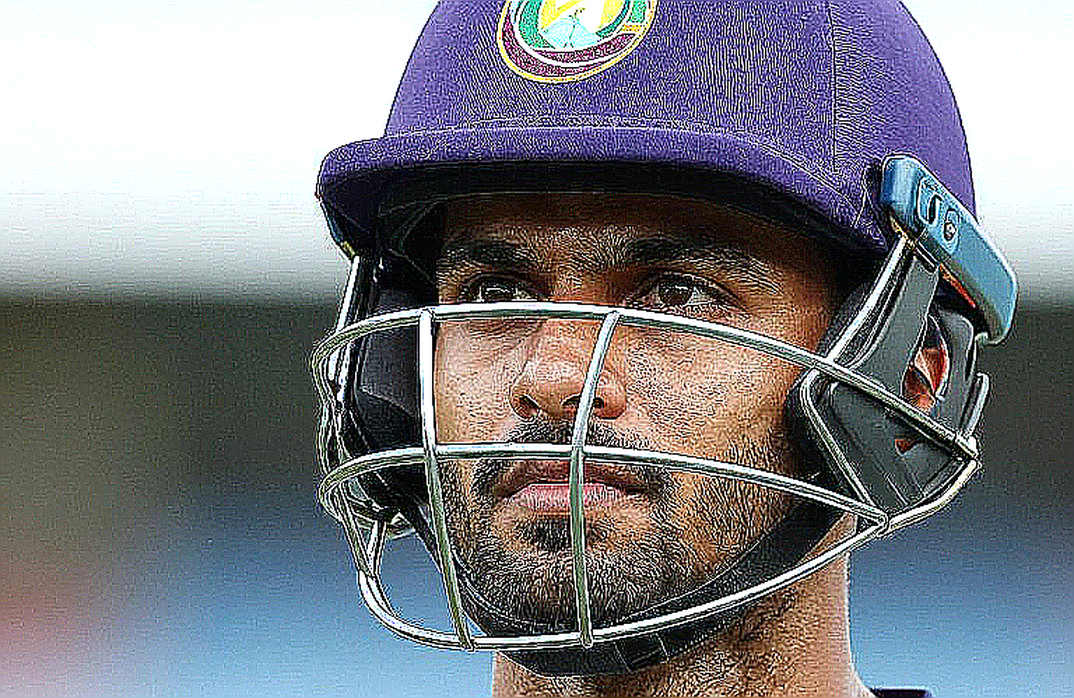
The second thing. If Phung is the anchor, the women's half shows flexibility. The Vietnamese pair demonstrates a deliberate squad-management model: keep the men's spine fixed, rotate the women's slot within a defined candidate pool. Van left the pair, Le Kim entered. That was not an injury replacement or a rescue. It was a choice. And it won.
To understand why that choice made sense, return to the age ladder. Chau Tuyet Van appeared in the individual Under-40 event but also in the Under-50 pair and team categories. An athlete touching two age brackets at once is a signal. It says two possible things: either she is near the Under-40 ceiling and chooses to step into the wider bracket, or the coaching staff has determined Under-50 is where her medal probability is highest. Either reading points to deliberate selection, not decline. In poomsae, age is not the abyss it is in combat sports where punch resistance fades with the years. Here, what decides is registered age bracket, flexibility, and leg explosiveness.
I remember a line I once wrote while wandering through a season of empty stands: "The body is a blackboard the coach never finishes reading." For a forms athlete in her mid-thirties, that blackboard still holds much unused chalk — as long as knees and ankle tendons survive the number of jumps an entire career has poured into them.
Nguyen Thi Le Kim is the opposite. She carries the heaviest load in the squad. On one hand, she reached the final and won gold in the mixed pair. On the other, she appeared in the women's team trio competing the very next day. An athlete appearing in two events, and a newcomer fitted into the peak system — that is an asset, and also a concentration of risk. If Le Kim breaks, the team loses both the gold pair and the team pressure at once. Poomsae has no weight problem, but it does have a competition-volume problem. More forms, more rounds, more jumps.
Now the part the scoresheet does not dare to say. In the report, there is one small detail I consider the single biggest disclosure: the absence of South Korean athletes from the bracket made the path easier. I read that sentence again and again. It admits that even the Vietnamese side views South Korea as the benchmark, and that this particular bracket became winnable partly because that benchmark had been removed from the equation.
I am not saying the gold is worth less. I am saying it needs to be placed correctly. A bracket without the reigning dominant nation is a different bracket in nature — not different in effort, but different in peak competitiveness. And when we speak of closing the gap with the leader, we must name the leader. In poomsae, that name is South Korea.
One more layer to peel: how does this gold connect to Hong Kong 2026? Many papers merged the two into one concept of "defending the title." Correct on outcome, but it hides an important truth: same category, different lineup. 2026 was Van and Phung. 2026 is Le Kim and Phung. To be precise, this is the first time Vietnam won this category with a new pair, not the first time at all — Hong Kong was the first. The distinction matters: a defending athlete winning by swapping partners is a stronger signal than an unchanged lineup winning again.
On the path, the path is credible. Four confederations. Myanmar, Chinese Taipei, Iran from Asia; Turkey from Europe; Denmark in the final. That is not a manufactured international picture. The only issue is the scoresheet carries no scores and no margins. We know Vietnam won, but not by how much. In a judged discipline, the margin of victory is what speaks to class. Without a margin, any claim of superiority is speculation.
I am not writing this to diminish. I write it because my professional creed is manual verification: what I have not personally counted, I mark as an estimate, with context. And here, the missing context is the numbers themselves.
One thing that must be said about the competition system. Poomsae runs on age brackets, not weight classes. This cuts both ways. The good side: it extends careers. A forms athlete can compete past sixty. The other side: it multiplies gold medals within one championship. When the number of "world champion" titles rises, the scarcity value of the title falls. This is no one's fault. It is structure. And structure determines how a gold is felt.
As for the discipline itself, poomsae also sits outside the Olympic program. Kyorugi — sparring — is what the Games embrace. Poomsae lives on internal prestige, on federation and state funding, on medal bonuses paid by governing bodies. Not on tickets, not on paid television, not on headline endorsement deals.
That is why I regard this gold as a sporting asset and a national-prestige signal, not a market signal. Its value converts into justification for training budgets, into system confidence, into enrollment at small martial-arts classes at home. These things are real but unmeasurable from inside a news report.
On health risk, poomsae sits near the bottom of the danger scale within martial arts. No strikes to the head, so brain-injury risk is nearly absent. No weight cuts, so dehydration death is off the table. What remains is cumulative injury from high-jump-kick volume — ankle tendons, knees, hamstrings. For an athlete like Van, touching two age brackets and multiple events, the biggest question the report raises is load management. For Le Kim, competing in the pair and the team back to back, that question grows larger.
Now the contrarian part — the blind spot of both the media and the fans.
First, standard differs from freestyle. Standard poomsae carries no technical-difficulty scoring for harder moves; Vietnam's edge here therefore lies in consistency and synchronization, not in harder technique. In other words, we did not win by throwing more double spins than the opponent. We won by doing the basic thing cleaner than others. That is an entirely different competitive axis from freestyle poomsae — and the axis must be read correctly before naming the progress.
Second, the Korean absence. This is where I want to spend the most words.
If you read a gold medal in a bracket missing the giant as proof of parity, you are reading it wrong. South Korea's absence from the bracket is information with weight, but that weight does not fall on Vietnam's gold — it falls on how the gold is valued. And the fact that the Vietnamese side itself acknowledges this means the sport is very clear-eyed about its position.
I do not see this as a trap of complacency. I see it as an opportunity.
Because once you have correctly identified the peak — South Korea in poomsae — every plan for the next cycle becomes clearer.
In a judged discipline like poomsae, there is a structural risk I do not want to skip. Panels rather than decisive scores: that is why this sport's stage routinely carries transparency worries, especially when the event is held in the home of the dominant nation. No protest was recorded this time, and that is a plus. But the systemic risk remains, not because anyone wants to favor anyone, but because any discipline judged by the human eye makes it hard for the loser to be fully trusted.
So what does the 2026 gold leave behind?
It leaves an anchor. Nguyen Thien Phung, two cycles, two partners. That is a memorable crest in Vietnamese poomsae.
It leaves a succession formula. Chau Tuyet Van — the veteran spine — shifts toward suitable categories while still applying medal pressure. Nguyen Thi Le Kim steps into the central role. Coach Nguyen Thanh Huy made the call, and the call was right.
And it leaves one unanswered question: what happens the time South Korea is present?
This is not a rhetorical question to soften the good news. It is a technical one. Because if Vietnam's edge in the standard category is consistency and synchronization, then those are precisely the qualities that can be raised over time, not qualities dependent on an opponent staying home. Once a form lives in the body, the rhythm does not dissolve on its own. It only needs time to train.
That is the point I want to stress most. The strength of poomsae does not lie in the opponent across the mat. It lies in yesterday's session, in tomorrow's session, in thousands of repetitions until arms and feet remember accuracy on their own. An entire career is built in silence.
And in that silence, there is a line I have long kept: "My trade is finding the piece the whole stadium forgot."
At Chuncheon 2026, that piece was a girl newly entered into a champion pair, a man who twice stood on top with two different women, and a coach who quietly chose stability over fame. No glamour, no clamor. Only a form done right, exactly as it should be done.
I am still counting each rhythm. Not to check whether someone was wrong. Only to remind myself that sometimes the biggest thing in sport lies in the smallest movements, visible only to an eye willing to sit still and look.
If you ask me whether this gold opens an era, I will answer with a doubt. But if you ask me whether it teaches us to read a gold correctly, I think the answer is yes. And sometimes teaching people to read is harder than winning gold. It demands counting, sitting still, and accepting that some things the scoresheet never writes down.
Tomorrow, when Van and Le Kim step onto the mat for the team event, I will sit and count again. Not to find fault. But to see whether the rhythm formed at Chuncheon holds intact when it must carry one more body. That is the real test. One gold pair is already hard. A durable string of golds is many times harder.
And perhaps, in the depth of Vietnamese poomsae, that very difficulty is what is worth writing next.